
Top-notch OPC Registration Services: Choose Us for One Person Company Registration
Best Service for You
Keeping Your Team Productive

The OPC will give the registration certificate and invoice bill to the customer.
COI
MOA
AOA
DSC
Company Pan & Tan

Company need Required Documents for OPC Registration
PAN (self attested)
Govt ID proof – Aadhar card or Voters’ ID or passport or driver’s license (self attested)
Bank Statement (self attested)

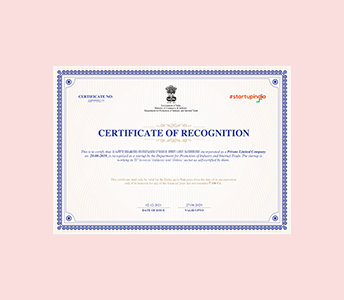
Company Provide Certificate.
Best Service for You
Best Support Service
A One Person Private Limited Company (OPC) is a type of company structure in India where a single individual can start and operate a business as a separate legal entity. This means that the individual will have limited liability protection and the company will have a perpetual existence, separate from the owner .
The main advantage of a One-man private limited company is that it allows a single person to start and operate a business with limited liability protection, similar to a traditional private limited company. This means that the personal assets of the owner are protected in case the business incurs any debt or legal issues
Another important advantage is that a One Person company private limited has a separate legal identity, which means that it can enter into contracts, sue or be sued in its self-name, and self-assets in its self-name. This provides greater credibility and ease of doing business, as compared to a sole proprietorship.
In India, OPCs are governed by the Companies Act, of 2013, and are a popular choice for small businesses and entrepreneurs who want to start a business with limited liability protection. Additionally, single person private limited companies also enjoy certain tax benefits and exemptions, making them an attractive option for business owners

A One Person Company (OPC) is a type of business structure where a single individual can form and operate a company as a separate legal entity. This structure allows entrepreneurs to enjoy the benefits of limited liability while being the sole owner and director of the company. OPCs are typically suitable for small businesses and startups, providing a simplified and flexible option for solo entrepreneurs to run their businesses with limited regulatory requirements.

A One Person Company (OPC) is a distinct legal entity established under the legal framework of corporate law, wherein a single individual, referred to as the “One Person Company” or “OPC,” holds the entire share capital. The OPC structure allows a sole entrepreneur to enjoy limited liability protection, separating personal assets from business liabilities. The OPC definition emphasizes its unique characteristic of being owned, managed, and controlled by a single person. This form of business entity is designed to provide a simplified and efficient structure, combining the advantages of a private company with the ease of operation for solo entrepreneurs

To register as a One Person Company (OPC), individuals must meet specific eligibility criteria outlined by regulatory authorities. The key eligibility criteria for OPC registration include:
Meeting these OPC eligibility criteria is crucial for individuals aspiring to register as a One Person Company. Adhering to these conditions ensures compliance with legal requirements and sets the foundation for the smooth operation of the OPC structure.
If you are interested in registering for a One Person Private Limited Company, you can do so through our company. We offer One Person Private Limited Company Registration services to make the process easier and more efficient. Here are the steps and required documents for registering your One Person Private Limited Company through our service:
Entities seeking Section-8 Company registration in India must adhere to specific eligibility criteria outlined in the Companies Act, 2013. To qualify for registration as a Section-8 Company, the entity must primarily intend to promote charitable, social welfare, educational, religious, or scientific objectives. The eligibility criteria include:
Required Documents for One Person Private Limited Company Registration:
Registering a One Person Company (OPC) in India involves a systematic process. Here is a step-by-step guide to help individuals navigate through the OPC registration procedure:
Step 1: Get Digital Signature Certificate (DSC)- The initial step is to get a Digital Signature Certificate (DSC) for the sole member and the nominee director. This is necessary for the electronic filing of documents during the registration process.
Step 2: Get Director Identification Number (DIN)- The subsequent stage is to apply for Director Identification Number (DIN) for the sole member and the nominee director. DIN is a unique identification number required for company directors.
Step 3: Choose a Unique Name for OPC- Propose and reserve a unique name for the OPC. Ensure the name adheres to the guidelines set by the Ministry of Corporate Affairs (MCA) and is not similar to existing company names.
Step 4: Prepare Memorandum and Articles of Association- Draft the Memorandum of Association (MOA) and Articles of Association (AOA) specifying the business objectives, capital structure, and rules for the company.
Step 5: Obtain Consent and Nomination- Obtain written consent from the nominee director and their agreement to act as the director. Also, secure their consent to take up the position in case of the sole member’s incapacity or demise.
Step 6: File Documents with the Registrar of Companies (ROC)- Prepare and submit the OPC registration documents, including the DSC, DIN, MOA, AOA, and consent and nomination letters, to the Registrar of Companies (ROC).
Step 7: Pay Registration Fees- Pay the prescribed registration fees to the ROC. The fee structure may vary based on the authorized capital of the OPC.
Step 8: Verification by ROC- The ROC will review the documents and, if everything is in order, issue the Certificate of Incorporation. This certificate signifies the official formation of the OPC.
Step 9: PAN and TAN Application- Apply for Permanent Account Number (PAN) and Tax Deduction and Collection Account Number (TAN) for the OPC.
Step 10: Open Bank Account- Finally, open a bank account in the name of the OPC using the Certificate of Incorporation and other relevant documents.
Note: The entire OPC registration process can be completed online through the Ministry of Corporate Affairs (MCA) portal. However, certain documents may need to be submitted physically, and obtaining DSC and DIN often involves offline steps.
Choosing between online and offline registration for a One Person Company (OPC) depends on various factors. Here’s a comparison to assist individuals in determining the most suitable option for their circumstances:
Online OPC Registration:
1. Convenience: Online registration offers convenience as it allows individuals to complete the entire process from the comfort of their homes or offices.
2. Time Efficiency: The online process is generally faster, as it eliminates the need for physical document submissions and allows for quicker verification by the Registrar of Companies (ROC).
3. Document Uploads: Most documents can be uploaded electronically, reducing the hassle of physical paperwork.
4. Real-time Tracking: Applicants can track the status of their registration in real-time through the Ministry of Corporate Affairs (MCA) portal.
5. Digital Signatures: Online registration requires obtaining digital signatures for the sole member and nominee director, ensuring secure electronic filing.
Offline OPC Registration:
1. In-person Submissions: Offline registration involves physically submitting documents to the Registrar of Companies (ROC) office, which may be inconvenient for some individuals.
2. Document Courier: Sending physical documents may require courier services, incurring additional costs and time.
3. Processing Time: Offline processes may take longer due to the manual handling of documents and verification by authorities.
4. Location Dependency: The applicant may need to visit government offices multiple times, depending on the location of the ROC office.
5. Document Attestation: Some documents may need to be notarized or attested by a gazetted officer, adding to the complexity of the process.
In the context of One Person Company (OPC) registration, the Memorandum of Association (MOA) and Articles of Association (AOA) are foundational legal documents that define the structure, purpose, and internal regulations of the company. The MOA outlines the company’s fundamental objectives and the scope of its operations. It specifies the activities the OPC is authorized to undertake and restricts it from engaging in activities beyond its defined scope. Clauses in the MOA include the company’s name, registered office address, object clauses, liability clause, and capital clause.
Complementing the MOA, the AOA lays down the rules and regulations governing the internal management and day-to-day affairs of the OPC. It covers details such as the appointment and powers of directors, conduct of meetings, voting rights, and procedures for decision-making. The AOA serves as the OPC’s internal rulebook, ensuring smooth functioning and providing a framework for corporate governance. Both the MOA and AOA are submitted to the Registrar of Companies during the OPC registration process and act as the company’s constitution. Amendments to these documents require shareholder approval and ROC filing.


OPC Compliance Requirements:
1. Annual Filings
2. Board Meetings
3. Auditor Appointment
4. Income Tax Returns
5. Director’s Report
6. Statutory Audit
7. Annual General Meeting (AGM)
Importance of Adhering to Legal Obligations:
1. Legal Compliance
2. Credibility
3. Avoiding Legal Consequences
4. Financial Transparency
5. Maintaining Good Standing
6. Investor Confidence
7. Operational Efficiency
Challenges in OPC Structure:
1. Sole Decision-Maker: The OPC structure relies on a single individual for decision-making, which can lead to limited perspectives and potential burnout.
2. Nominee Director’s Responsibilities: The nominee director may face challenges in understanding and fulfilling their role, especially if they are not actively involved in the day-to-day operations.
3. Scaling Limitations: OPCs may encounter difficulties in scaling the business due to the restrictions on the number of members. As the business grows, a transition to a private limited company may be necessary.
4. Compliance Burden: While OPCs have simplified compliance requirements, staying compliant with various regulations and filings can still be a challenge for small business owners.
Solutions for OPC:
1. Advisory and Mentorship: Seek advice and mentorship from industry experts and professionals to supplement the perspectives and decision-making of the sole entrepreneur.
2. Training for Nominee Director: Provide adequate training and orientation for the nominee director to help them understand their responsibilities and contribute effectively to the company.
3. Strategic Partnerships: Explore strategic partnerships and collaborations to overcome scaling limitations. This allows the business to benefit from external expertise and resources.
4. Professional Services: Engage professional services, such as legal and financial experts, to assist with compliance requirements and ensure that the business stays on the right side of regulatory obligations.
OPC registration is the process of registering a One Person Company with the Registrar of Companies (RoC)..
The formation of an OPC is restricted to Indian nationals who are residents of India, and individuals of foreign nationality or non-resident Indians (NRIs) are not eligible to establish an OPC.
The average duration for OPC registration is usually between 10 to 15 days, depending on the state in which the registration is being done and the completeness of the submitted documents.
Yes, an OPC can be converted to a private limited company if its paid-up capital exceeds Rs. 50 lakh or its average turnover for the previous three years exceeds Rs. 2 crore.
Yes, an OPC registration needs to be renewed annually by filing the necessary documents and paying the prescribed fees to the RoC.
Yes, online One Person Private Limited Company registration is possible in India.






POWERED BY

Vishvais Counsel is one of India’s leading business assistance firms, delivering customized solutions tailored to each client’s unique requirements.
